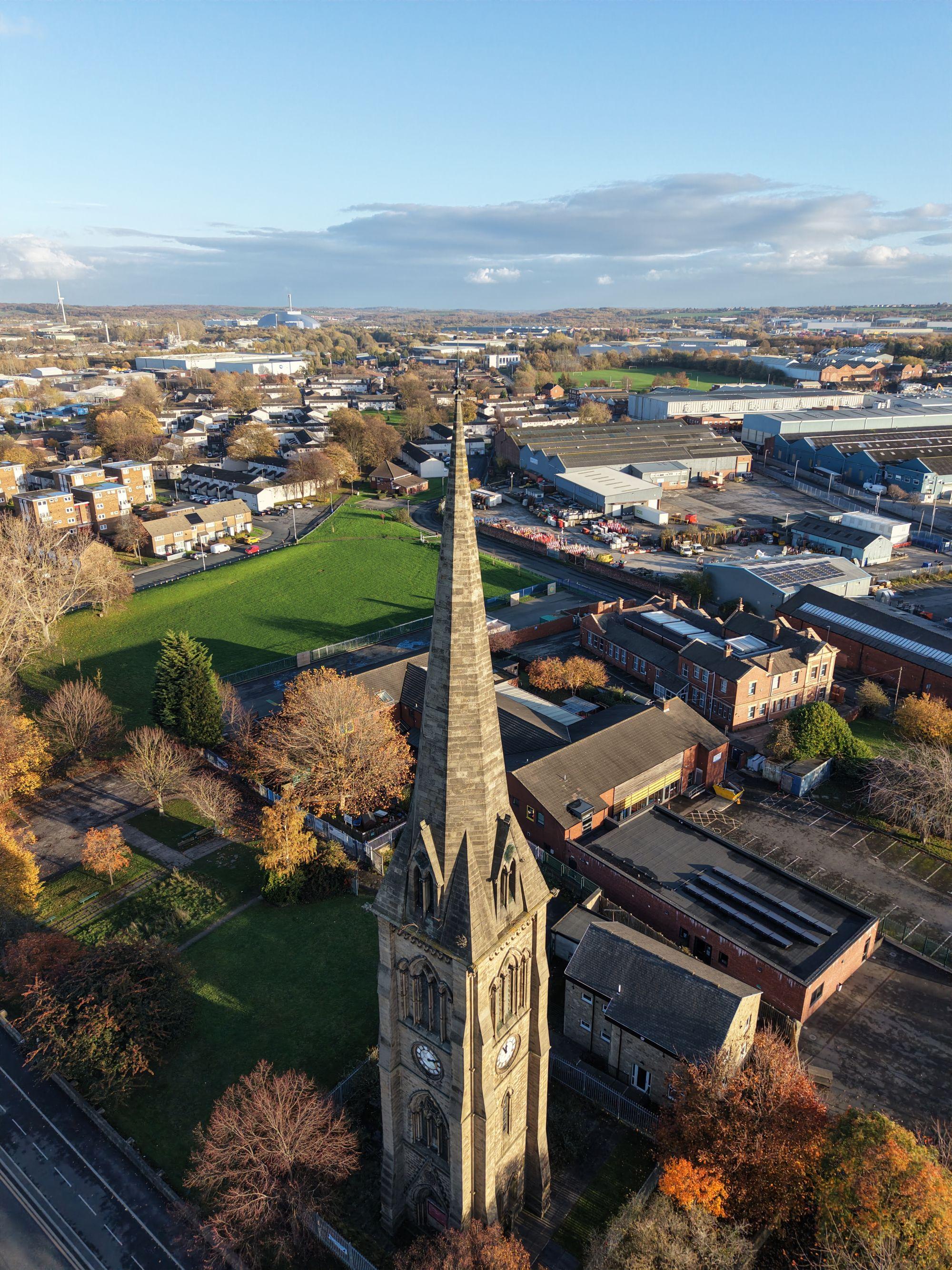
Wakefield city breaks into three kinds of street. Round St John’s and Sandal you get Victorian terraces and villas. Lupset, Eastmoor, Flanshaw and Portobello are big inter-war and post-war estates. Sandal, Walton and Durkar have the 1960s to 1990s private housing. The post-war semi is the classic Wakefield roof: a plain gable and concrete tiles, room for eight to ten panels on the better pitch (3.5 kW) and a garage or utility wall for the battery.
In the former pit towns and villages of Castleford, Pontefract, Normanton, Featherstone, Knottingley and Hemsworth, long rows of red-brick terraces sit under slate or concrete roofs. Each one also has a ring of new-build estates from the past twenty years. Those estates give the fastest fits around, thanks to wide trussed roofs and modern consumer units, and a south-facing garden often comes with a roof to match.
Ossett, Horbury, Crofton and Ackworth in particular have lots of bungalows. A bungalow roof will usually hold more panels than a retired couple needs, so the sums start from how much you use. After that the question is whether a battery earns its keep when someone is home in the day.