How much do solar panels and a battery cost in Leeds? What moves the quote in 2026 and 2027
Nobody can give you one honest price for Leeds, because the roof, the scaffolding and the consumer unit change it from house to house. Here is what moves a quote, what the 31 March 2027 VAT deadline does to it and what a fixed quote should spell out.
By The team at AFL Solar7 min read
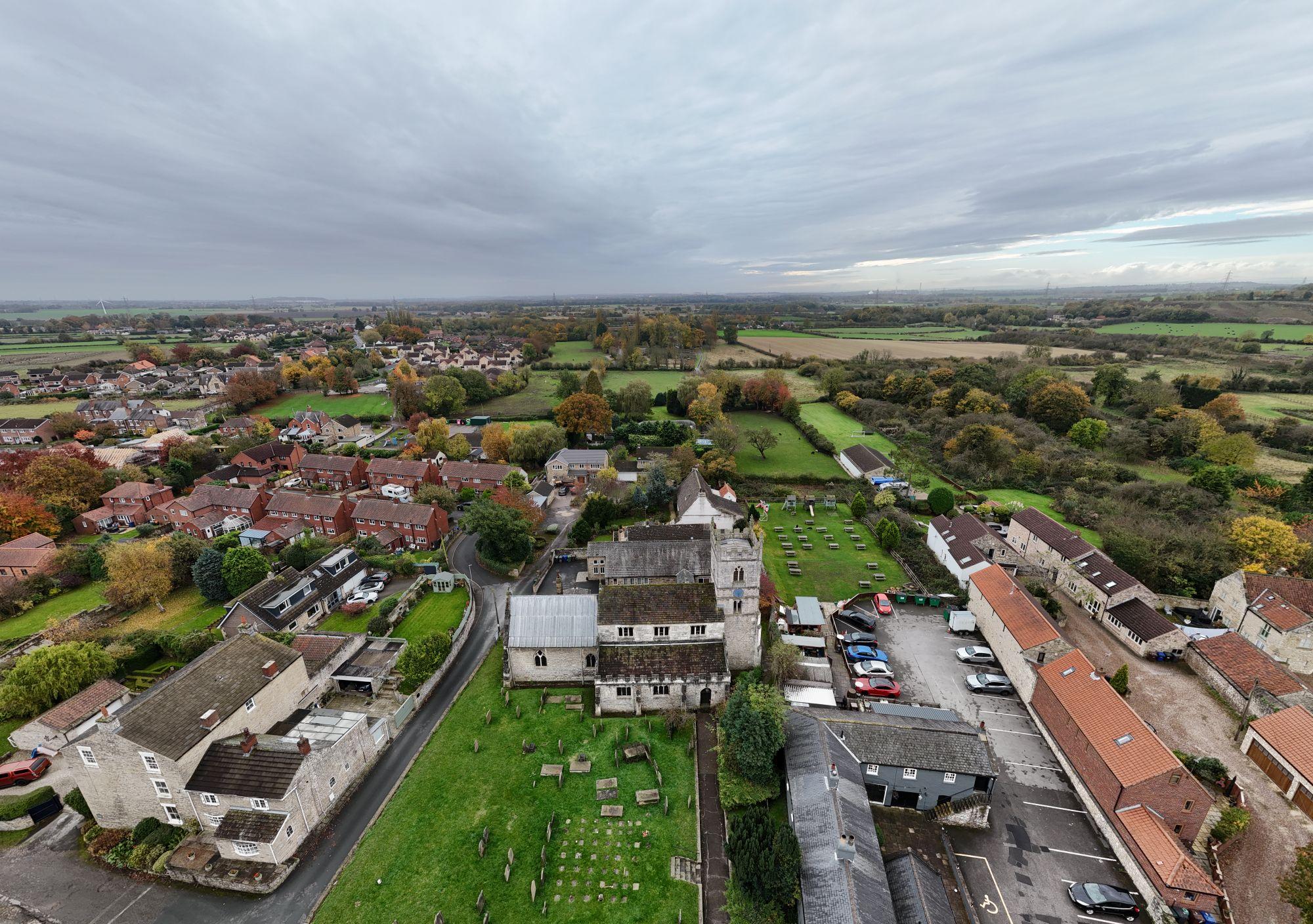
No honest person can give you one price for solar and a battery in Leeds, and a figure from a web form is a guess. The usual shape for a semi here is 3.5 kW with a 5 kWh battery, yet that same kit can land at very different prices on a back-to-back in Armley and a detached house in Adel. The roof and the scaffolding do that. Below is what moves the number, so the quote makes sense when it arrives, and why 31 March 2027 deserves a place on your calendar.
What drives the cost of the panels
- Panel count and output. Today’s panels run at 430 to 470 watts, so 3.5 kW is eight panels and 4 kW is nine or ten. Each extra panel adds cost, but scaffolding, inverter, labour and certification stay roughly fixed, so a bigger system comes out cheaper per kW.
- Scaffolding. This is the biggest swing in Leeds. A detached house with a drive takes one simple lift. A terrace on a busy Headingley road can mean a Leeds City Council pavement licence, a tower on the road side and extra weeks of hire. A back-to-back with no way round the rear is the toughest job of all, and the quote will show it.
- Roof covering. Concrete tiles are the easy ones. Welsh slate asks for more care. Older houses in Huddersfield, Halifax and along the Pennine side of Leeds often wear stone slate, which is heavy, uneven and costly to disturb. The mounting kit and the hours on the roof both go up. Flat roofs need a ballasted frame.
- Cable runs and the consumer unit. An old or full consumer unit means a new board or an extra enclosure. A long run from an inverter in the loft to a battery in the garage adds cable and labour.
- Bird protection and optimisers. Pigeon mesh earns its place near trees, and in Roundhay and Horsforth the pigeons are well fed. Optimisers help where a chimney or a neighbour’s extension shades the roof. On a clear roof they cost money and give nothing back.
What drives the cost of the battery
Batteries are priced on usable capacity. Two or three people will usually suit 5 kWh. Go up to 10 kWh for a larger house, an electric car or a heat pump. The inverter matters as well. On a new system a hybrid inverter runs panels and battery together and is the neat option, while adding a battery to existing solar usually means an AC-coupled unit with its own inverter. Power-cut backup means extra wiring and a changeover device. Floor or wall, garage or outside wall: each changes the day’s work a little.
Why you will not find a rule of thumb here
Plenty of sites quote a price per kW. We do not, because scaffolding and the roof can push the real figure either way, and a number that only holds on an easy roof is no use on yours. Our calculator shows what a system should save. The written quote after the survey is the only price worth planning around.
The saving on a 3.5 kW Leeds system
Start from 850 kWh per kWp a year, the PVGIS figure for northern England, then apply 0.9 for a typical roof. That takes 3.5 kW to about 2,678 kWh a year. Put a household paying around £150 a month through the calculator and you get:
- No battery: about 35% of it used in the house at 26.32p and the rest exported at 8p, so roughly £386 a year.
- A 5 kWh battery: about 70% used in the house, so roughly £558 a year.
Those sums use 26.32p, the Ofgem cap rate for 1 October to 31 December 2026. Ofgem sets the January to March 2027 cap on 25 November 2026, and Cornwall Insight expects a typical bill of about £1,999 (forecast, as of 6 November 2026). The dearer each unit gets, the sooner solar pays its way.
The VAT sums: 0% now, 5% from 1 April 2027
Panels, batteries and the work to fit them carry no VAT in Great Britain until 31 March 2027. From 1 April 2027 they carry 5%, confirmed in the Budget on 28 October 2026. That puts £50 on every £1,000 of your quote. The tax point sets the rate and it is normally the invoice date, so a system must be fitted and invoiced by 31 March 2027 to get 0%. A deposit paid in time leaves the balance exposed. If you are weighing up when to go, the VAT deadline page walks through how it works and what lead time to expect.
What a fixed quote should spell out
A quote worth comparing, and one you can hold an installer to, lists:
- Make, model, number and wattage of the panels, plus the total system size in kW.
- The inverter’s make, model and warranty.
- The battery: make, usable kWh, warranty and its cycle or throughput rating.
- Any pavement licence, plus scaffolding and access.
- Any consumer unit work, and how the earthing is handled.
- The MCS paperwork, and who notifies Northern Powergrid.
- The workmanship warranty, who issues it and whether insurance backs it.
- The VAT rate used and the date the price runs to.
If you get a lump sum and a panel count and little else, ask for the rest before signing. Quotes booked through us follow a free survey by the MCS-certified installation team and carry their name and MCS number.
Six questions for any installer
- Is the price fixed, and for how long?
- Who holds the MCS certification, and what is the number?
- Which consumer code do you belong to, and how is my deposit protected?
- What is the battery’s usable capacity, as opposed to its nominal one?
- If you stop trading, what happens to the warranty?
- Can you fit and invoice this by 31 March 2027?
Where do these numbers come from? The savings run on 26.32p import, 8p export and 850 kWh per kWp, which is what the calculator uses too. Once you have a fixed quote, work from that.
Next: a fixed price for your roof
Book a free survey and we ring to check your home suits solar. The installation team then visits and puts a fixed price in writing, with the 0% VAT already applied. The Leeds page covers roofs across the city, and the grants guide sets out what help, if any, you can get.
Questions people ask about this
Why will you not just give me a price?
Will solar cost more after 31 March 2027?
What belongs in a fixed quote?
How long does solar take to pay back in Leeds?
See what solar would actually cost on your roof
A written quote after a free survey, with 0% VAT already applied. Across Leeds and West Yorkshire.